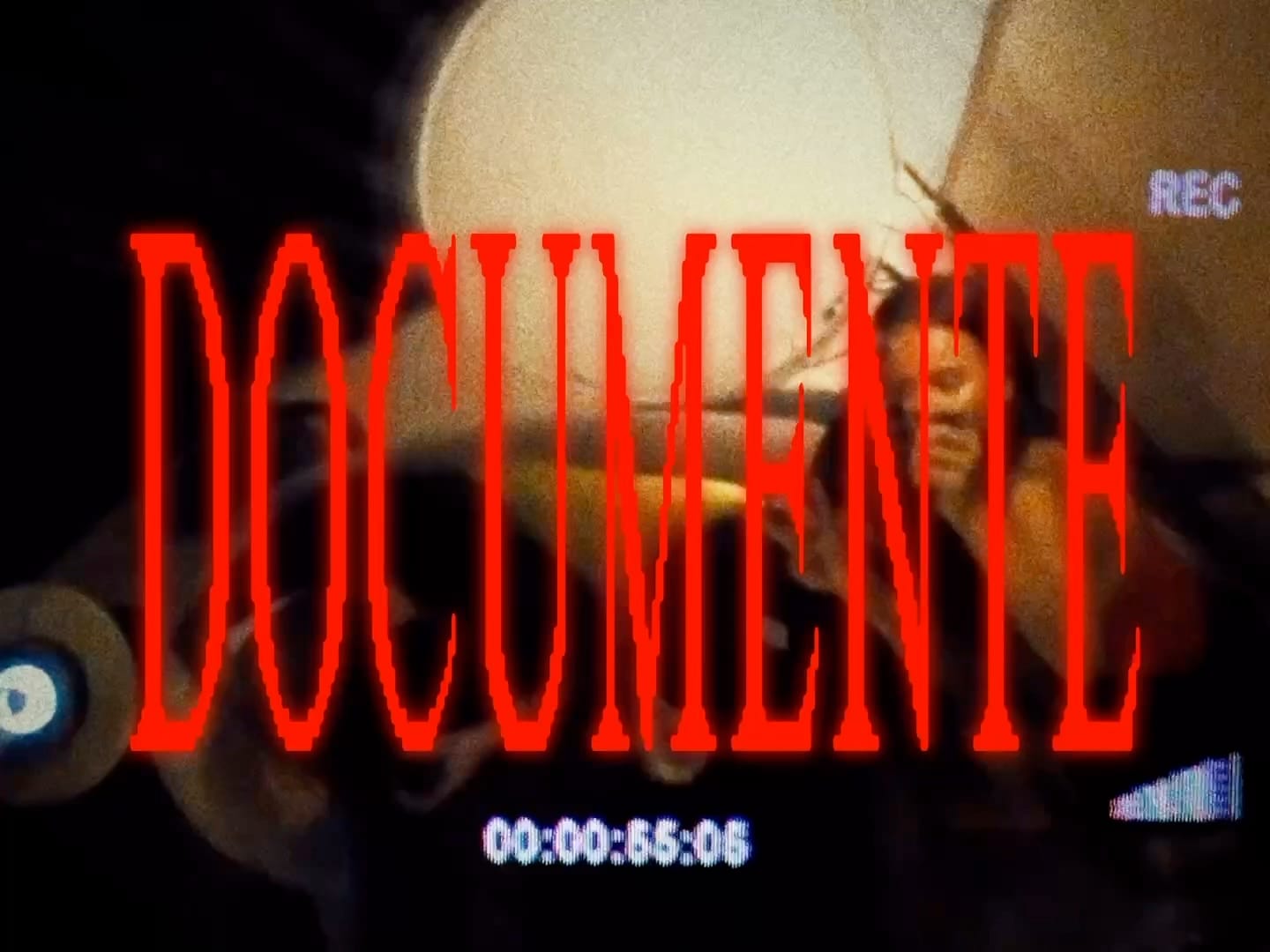
The Art of Documenting.
The mindset, sharing with zero expectations, the €200,000 return, and the exact minimalist setup I use to document my life.
If I am fully honest, I love documenting. I think I will never stop. But left to myself, I would much rather not share any of it.
I share it because I am frustrated by the lack of transparency online. I personally know many of the people you guys look up to, and I know the behind the scenes of their lives. Not to throw anyone under the bus. But if you think what I have shared so far, whether in my emails or in Dropout, is tough, it is nothing compared to what most people actually go through. Yet you see none of it online. Because of shame. Because people want to save face and be seen a certain way. And that is okay.
The problem is what it does to you when you try to build a life of your own. You get into entrepreneurship, you try to live off your passion, and at some point shit hits the fan. And when it does, you feel like a failure. You think you are the only one struggling, because everyone you see online never shows the trenches. They never show the real cost of getting there. At best they drop vague hints like 'it is not easy,' but you never see the depth behind those words.
I came to terms with something: for as long as I see a need, my life is going to be a documented experiment. So in this journal I want to share everything I know about documenting. The mindset behind it. The mental benefits. The direct financial returns, with my own numbers from Dropout. And how to document your own journey, with the exact minimalist setup I use today.
Betting on yourself
Before the how, you have to understand the mindset, because the mindset is the biggest benefit of all.
If there is one indicator that tells me someone will succeed when I meet them, it is whether they document or not. When people truly believe they are going to make it, sometimes to the point outsiders call delusional, they document.
Think of the Kanye West documentary, Jeen-Yuhs. They started filming when he was still grinding in the trenches, with zero guarantee of success from the outside world. In his mind there was no doubt, so it had to be recorded.
I recognize a lot of myself in that. The first video I ever recorded is me talking face cam in broken English, saying "I am going to success". There is even a line I cut because it felt like too much: 'and maybe, one day, I will be your hero.' That is an insane thing to say when you are a kid from the hood with no business experience, no prospects, and a family that would not bet a cent on you. Most people would call that delusional. Yet look at everything that happened since.
Starting to document was proof to myself that whatever challenges came my way, I would find a solution. I believed I could find a way out of any situation. And the same is true right now. I am going through a very turbulent time of my life, and this is exactly when I document the most. Because it will be part of the story, and one day people will need to see the truth of it. How deep it went. What my mindset was inside it.
Documenting, before anything else, is you betting on yourself. Nothing else.
'I have nothing to film' is bullshit
Every time people talk to me about documenting, they give me the same excuse. 'I have nothing to film right now. Nothing happens in my life.'
I think it is bullshit.
Maybe you are in the trenches. Maybe you just stay home and work. Maybe you are in a tough spot. Your thought process, what you are scared of, what runs through your head every day, all of that has value. But you have to understand something about value.
When your parents take a picture of you as a child, the moment that picture is captured, it has almost no value. You look at it, they look at it, everyone says it is cute, and you move on. Then time passes. Life happens. Twenty years later, that same picture can become one of the most treasured possessions someone owns.
It is not because something has no value now that it will have none in the near, mid, or long-term future. Value increases with time. You do not need to know today what you will do with that shot. The story will reveal itself as things happen. That is the beauty of documenting. We are confident about where we are going, but we do not know everything we will have to go through to get there.
So the job right now is simple: capture. Just capture.
Sharing the work
The first thing I would say about sharing is this. The best mindset you can have is to document with no expectation of sharing it at all. Or at least not publicly.
Because that is what lets you document authentically. No mask. Naturally. And that is what creates the most powerful type of content you can find on the internet. The most authentic kind.
Then if at some point you feel it might be time to share, keep the same mindset. Expect nothing from it. Do not corrupt the work. The second you expect something out of it, it loses a lot of its authenticity. And it loses its power to have true impact.
I think that is why a lot of people doing build in public stop after a while. They were expecting stuff. So they were wearing a mask while doing it. So they quit.
For me the goal is different. I want to be scared of sharing it. When I am scared, that is how I know I have something true. Something deep. Something that can have an impact. That is the space you want to be in when you share documentation.
That is also why I can only speak from experience here. Sharing is incredibly unpredictable. But inside that unpredictability is the potential for great and disproportionate rewards.
Sharing Dropout opened doors for me I never could imagine when i started. People I got to connect with. A community. People well established I would never have reached otherwise. Like Yomi Denzel who was one of the first person to reshare episode one, at a time where I did not even know who he was. I followed him back (Small flex). And it allowed me to connect with someone who is now a brother to me. A best friend.
The second benefit was financial. When I started sharing Dropout, I was not expecting any financial result. I was not even making enough views to monetize on YouTube anyway. But I can directly link a minimum of 200,000 euro from Dropout to my businesses. People who watched it and decided to work with me instead of others, even though I may not be the most impressive and qualified person. Because they could relate to me.
The last benefit is more invisible. It is the life cycle of this type of content. In a world full of short lived content, I know something like Dropout can blow up tomorrow, next year, in 5 years, in 10 years, or even after my death. Authentic stories are timeless.
So the game of sharing is incredibly unpredictable. What you share might get no attention for years and then blow up one day. That is the beauty of it. We just do not know what is going to happen.
There are no rules. But there is one law.
The truth about documenting is that there are no rules. You can do it any way you want. Screenshots, photos, voice notes, private journaling. Or like me, filming.
What I can give you are my rules, and how my system evolved to what it is now.
The first one is the most important, and it comes before any gear: genuine curiosity. You have to be genuinely interested in the process itself. Trying things, catching moments. If you force yourself into a format you hate, if filming bores you and you copy someone else's workflow, you will drop the habit within weeks. Some people will document through photos, screenshots. Some through voice notes. Some through face cam videos. You must find the medium that feels natural to you, one you actually enjoy enough to want to get better at it.
For me, obviously, it is video. I love that art and that craft. So if you are like me and video is your thing, here is everything I use and the philosophy behind it.
"The best camera is the one that's with you." - Chase Jarvis
When I started documenting Dropout, I did it the worst possible way. Big DSLR camera, big tripod, carrying all of it everywhere I went. Documenting became tiring. And worse, it killed spontaneity. I had to stop, set up the camera, set up the tripod, calibrate everything. The magic of the authentic moment was gone before I even pressed record. I still got great shots, so it was okay. But I would never do it again.
Phase two was much better. I met my best friend, and the deal was simple: come live with me, I cover the rent, we have a great time, and the only thing I ask is that sometimes you pull out the camera and film whatever is happening. That footage was incredibly natural, because I could just live my life and trust his eye to catch the moment. That was a privilege, and I know it. He is in a relationship now, so I lost him... Which brings me to the current setup, and honestly I think it is the best one.
Your phone. As simple as it sounds. The one that lets you capture the moment before you miss it. Every time. Reliably. Consistently. That is the best camera.
The DJI Osmo Pocket (4P even now) is excellent, and if you are starting out it can be a great first step. But everything I shoot lately is just my iPhone. Or any smartphone you have, I do not care if it is a Samsung. Your phone is the best documentary camera in existence, because it is always on you. Insanely practical, insane quality, ready in two seconds.
I did add a few external tools around it, all living in the small bag I carry everywhere, so my whole studio moves with me. A very light, versatile tripod that fits in the bag. A few case-mounted lenses that sit directly over the main sensor. My two lenses are a 60mm for tighter, more cinematic shots, and an 18mm wide angle for POV-style immersion. That is it, no need to overcomplicate.
Computer, tripod, lenses, mics, all in one bag, everywhere I go. Total creative freedom.
And one recommendation that changes everything if you shoot on iPhone: do not use the native camera app. Use the Blackmagic Camera app. It is 100% free, and what comes out of it is on another level. There are plenty of YouTube tutorials that will teach you to use it better than I can.
Just Hit Record
Whatever you are building, whatever struggle you are living through right now: bet on yourself and hit record. Do not let shame keep the best story of your life untold.
I hope this journal makes you start documenting your own journey. And I truly hope what comes out of it is amazing stories. Real, authentic stories, shared in the near future.
Want the full process, on video?
I recorded a 1-hour video where I walk you through my entire process. The gear, in depth. How I shoot, how I frame, how I organize myself. And how I edit everything cinematic through a simple process.
If you want it, it is right here:
The Art of Documenting: Mobile Studio & Cinematic Output
The full gear breakdown, my Blackmagic settings, footage file management, and my exact cinematic editing workflow on DaVinci Resolve.
Access the private course →Halsius
Recent Entries
L'Art de Documenter.
L'état d'esprit, le partage sans attente, les 200 000 € de retours et le setup minimaliste exact que j'utilise pour documenter ma vie.
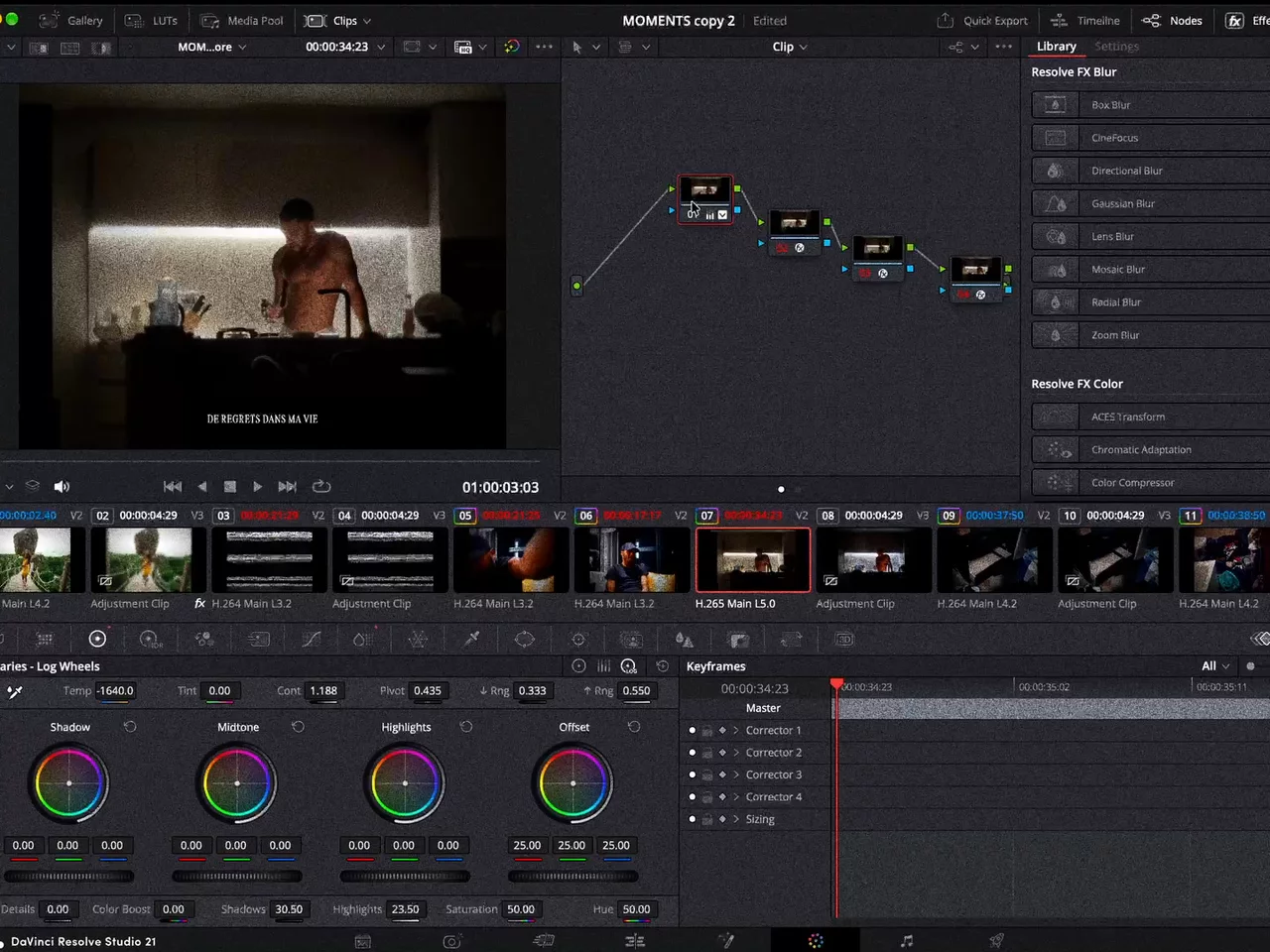
L'Art de Documenter : Studio Mobile & Rendu Cinématique
J'ai condensé mes années d'erreurs dans une seule vidéo. Après celle-ci, vous n'aurez besoin d'aucune autre.
MOMENT #1 - I WANT MORE
The hardest season of my life has begun. A friend who tried to destroy my reputation, a 5-year relationship ended in betrayal, and the toughest business transition. And yet? I've never felt more alive.
MOMENT #1 - I WANT MORE
La saison la plus difficile de ma vie a commencé. Un ami qui a essayé de détruire ma réputation, une rupture après 5 ans, et la transition Business la plus dure. Et pourtant ? Je n'ai jamais été aussi vivant.
JOURNAL #1 - De Retour Dans Les Tranchées.
Comment la pire période de ma vie est la meilleure chose qui pouvait m'arriver.
JOURNAL #1 - Welcome Back To The Trenches.
How the worst season of my life is the best thing that could ever happen to me.
Conversation #1 - My Best Friend
The most honest conversation I have had on camera. Sitting down with my closest friend, diving deep into what it really means to build something meaningful.
Conversation #1 - Mon Meilleur Ami
La conversation la plus honnête que j’aie eues devant une caméra. Assis avec mon plus proche ami, on plonge en profondeur dans ce que ça veut vraiment dire de construire quelque chose qui a du sens.
Timothée • Système d'Acquisition Client : Outils & Stratégies de Prospection Avancée
Machine d'acquisition B2B : scraping Apollo, workflows d'enrichissement cascade (Clay, Dropcontact), infrastructure cold email et prompts IA de personnalisation.
Katie Bani • Key Strategies to Automate, Optimize, and Scale Your Agency
How to run and scale a 6-figure agency working under 5 hours a week: robust SOP frameworks, VA delegation, automated onboarding, and pricing for profit.
[Anglais] Katie Bani • Les Stratégies Clés pour Automatiser, Optimiser et Scaler Votre Agence
Comment gérer et scaler une agence rentable en passant moins de 5h par semaine : systèmes de SOPs, recrutement de VAs, onboarding automatisé et marges maximales.
Thomas • L'Envers du Décor d'une Croissance d'Agence x10
Comment passer de la vente de sites web à 300€ à des packs récurrents premium >1000€/mois pour restaurants : personal branding, création de contenu vidéo et équipe 100% remote.
New entries dropping soon.